Beeskow mill
Made safely. Fed correctly.
A good feed conversion ratio is made in two places: at the mill, where raw materials, recipe and production have to be right, and on your farm, where feeding and husbandry make the difference.
What we pay attention to at the mill
GMP+ FSA certified
- Feed safety: the mill produces to GMP+ FSA, the international standard for safe feed.
- Independently audited: certification bodies recognised by GMP+ International audit the mill.
- HACCP and monitoring: risks are assessed according to HACCP and monitored continuously.
- Traceable: every batch can be traced back to its raw materials.
Strategic purchasing
- Approved suppliers: raw materials come from suppliers certified to GMP+ FSA or an equivalent standard.
- Targeted purchasing: we buy selectively. That benefits the price per kg of fish.
- Named raw materials: every product page names the protein sources, from LT fishmeal to shrimp meal.
Animal proteins
- Suited to the species: carnivorous fish make good use of animal protein. Its amino acid profile matches their needs for growth.
- Five sources: LT fishmeal, poultry meal, blood meal, hydrolysed feather meal and shrimp meal, combined to suit each feed.
- Gently processed: LT fishmeal is dried at low temperature, feather meal is hydrolysed and therefore digestible.
- Approved: processed animal proteins from non-ruminants are approved for aquaculture feed in the EU.
GMP+ FSA: Feed Safety Assurance, certification module of GMP+ International.
From raw material to bag: extruded
EX sinking, ExS floating. Extrusion takes place in a twin-screw extruder.
Check raw materials
Set the recipe
Grind and mix
Extrude
Dry
Coat with oil
Cool
Screen
Bag
From raw material to bag: pressed
SE, pressed pellet, sinking.
Check raw materials
Set the recipe
Grind and mix
Press pellets
Coat with oil
Screen
Bag
Raw materials from certified suppliers (GMP+ FSA), every feed with a recipe no.
Every species gets its own nutrient profile
- Crude protein
- Crude fat
Values as a table
| Crude protein (%) | Crude fat (%) | |
|---|---|---|
| BR 0–2 EX | 55.31 | 14.05 |
| AF 50/15 EX | 48.91 | 14.98 |
| FM 44/24 EX | 46.15 | 21.79 |
| FM 42/12 SE | 43.19 | 11.68 |
| FSM 47/15 EX | 47.22 | 14.30 |
| KA 38/12 EX | 37.77 | 11.17 |
| KS 26/06 ExS | 25.70 | 6.37 |
| CLS 50/15 ExS | 50.06 | 14.54 |
| SHR 40/10 EX | 38.98 | 9.87 |
| ZFS 54/13,5 EX | 53.18 | 13.59 |
- Fry: plenty of protein, so small fish build tissue quickly.
- Carp in ponds: little protein, natural food supplies part of it.
- Predatory fish: high share of animal protein (pikeperch, African catfish).
- And always: the values on the product sheet are the values on the label.
The figures in the feed name are rounded target values for crude protein and crude fat. The analysed values are on the product sheet; the label is binding.
We calculate with the energy the fish can really use
Example FM 44/24 EX, using the mill's calculation method.
- Gross energy
- 22.6 MJ/kg
- everything contained in the feed
- Digestible energy
- 20.6 MJ/kg
- minus indigestible components
- Metabolisable energy
- 18.5 MJ/kg
- minus the nitrogen the fish excretes
Protein × 23.66 · fat × 39.57 · carbohydrates × 17.17 kJ/g; digestibility protein 94%, fat 92%, carbohydrates 88%; protein for metabolisable energy at 18.64 kJ/g (nitrogen correction).
What the ingredients do
- Animal protein: amino acids for muscle and growth.
- Plant protein: complements the amino acid profile.
- Carbohydrates: energy and binding in the pellet.
- Fats: dense energy. Salmon oil supplies omega-3.
- Minerals: skeleton and metabolism (calcium, phosphorus).
- Functional: yeast product (MOS, beta-glucan), feed charcoal.
What you can rely on
- Open: every ingredient on the product sheet, in order of weight.
- Traceable: every feed with a recipe no. The catalogue and label name the same recipe.
- Safe: produced to GMP+ FSA, every batch traceable.
- Made for the job: sinking, floating or pressed, depending on species and system.
- Personal: made in Beeskow, advice from people who know your recipe.
- Own recipe: from a first order of 2–4 tonnes, depending on the feed type.
From research to practice
The Beeskow cycle: six steps that every Aquafeed feed goes through. We test new raw materials, recipes and processes in practice.
Understand requirements
Species, life stage, production system, water temperature and your goals.
Develop the recipe
Raw materials and nutrients matched to species, life stage and production system.
Test the feed
Acceptance, digestibility, performance.
Produce
At the Beeskow mill, extruded or pressed, to GMP+ FSA, in small batches too.
Gather feedback
Feeding behaviour, growth, feed conversion and water quality in your system.
Improve
Findings flow back into the recipe and feeding recommendation.
Our promise
- Every feed starts with your requirements, not with our stock.
- You talk to people who know your recipe and can make decisions.
- We tell you openly when another feed suits your farm better.
- Your feedback goes into the further development of our recipes.
The mill in Beeskow
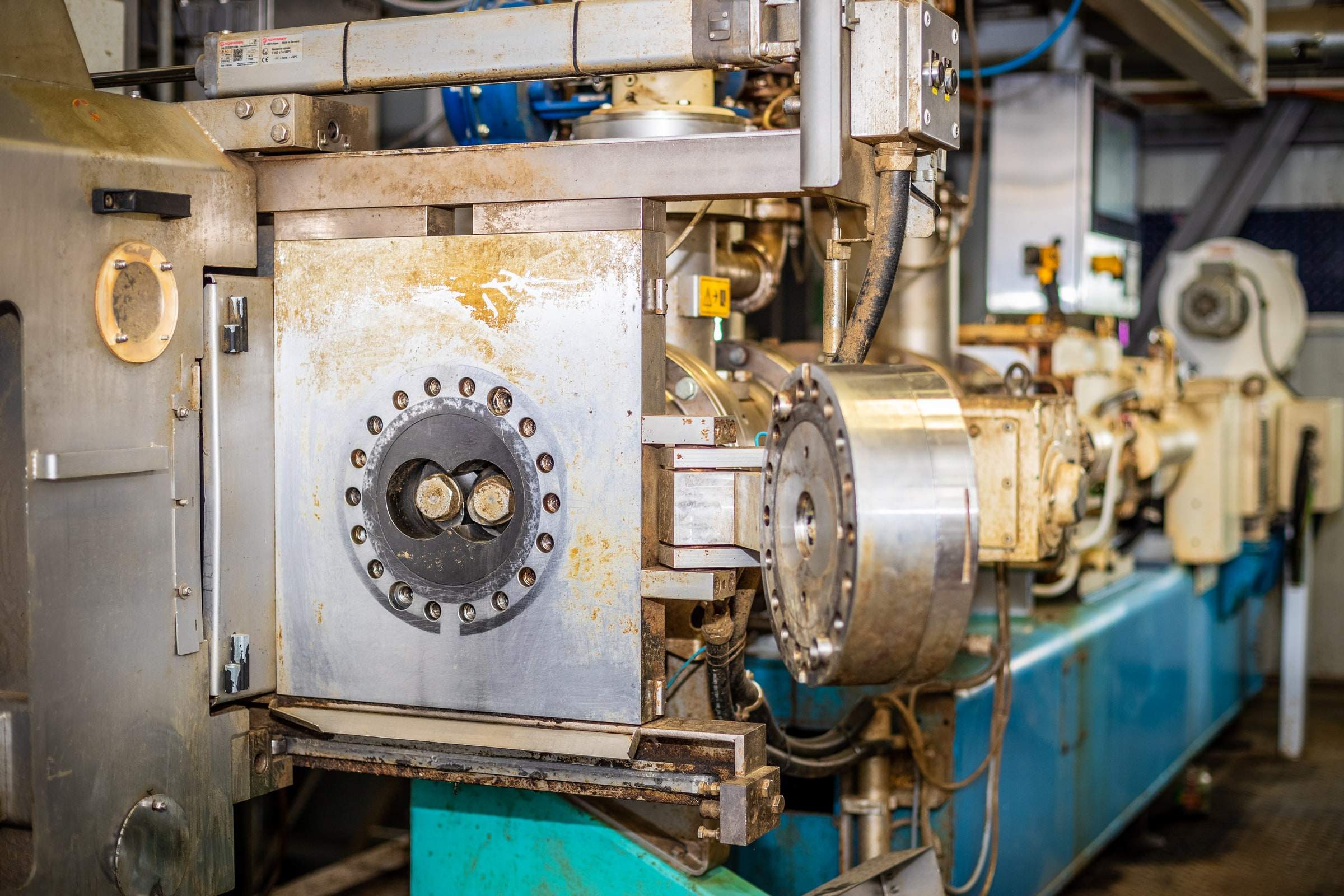
Twin-screw extruder at the Beeskow mill 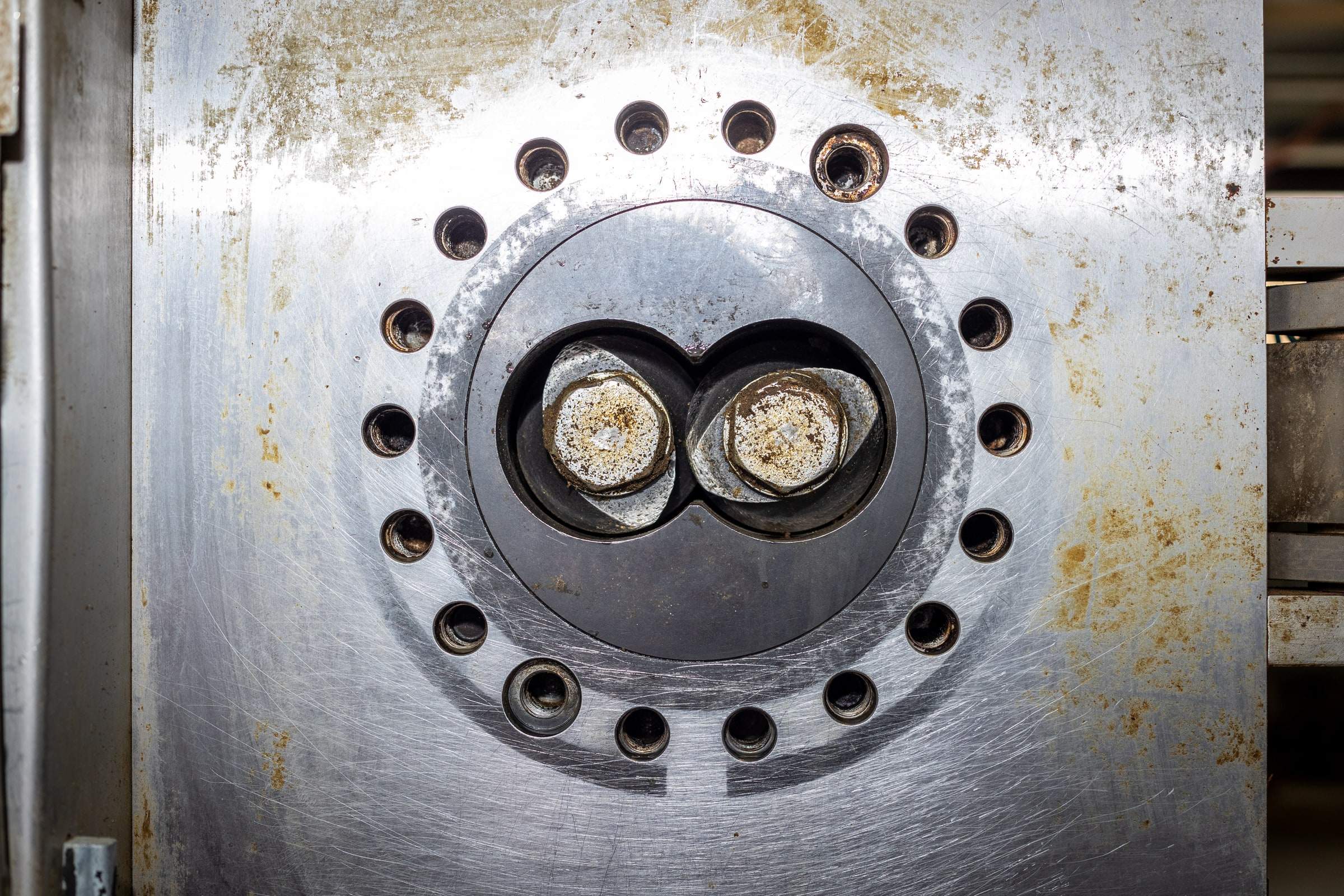
The two screw shafts of the extruder 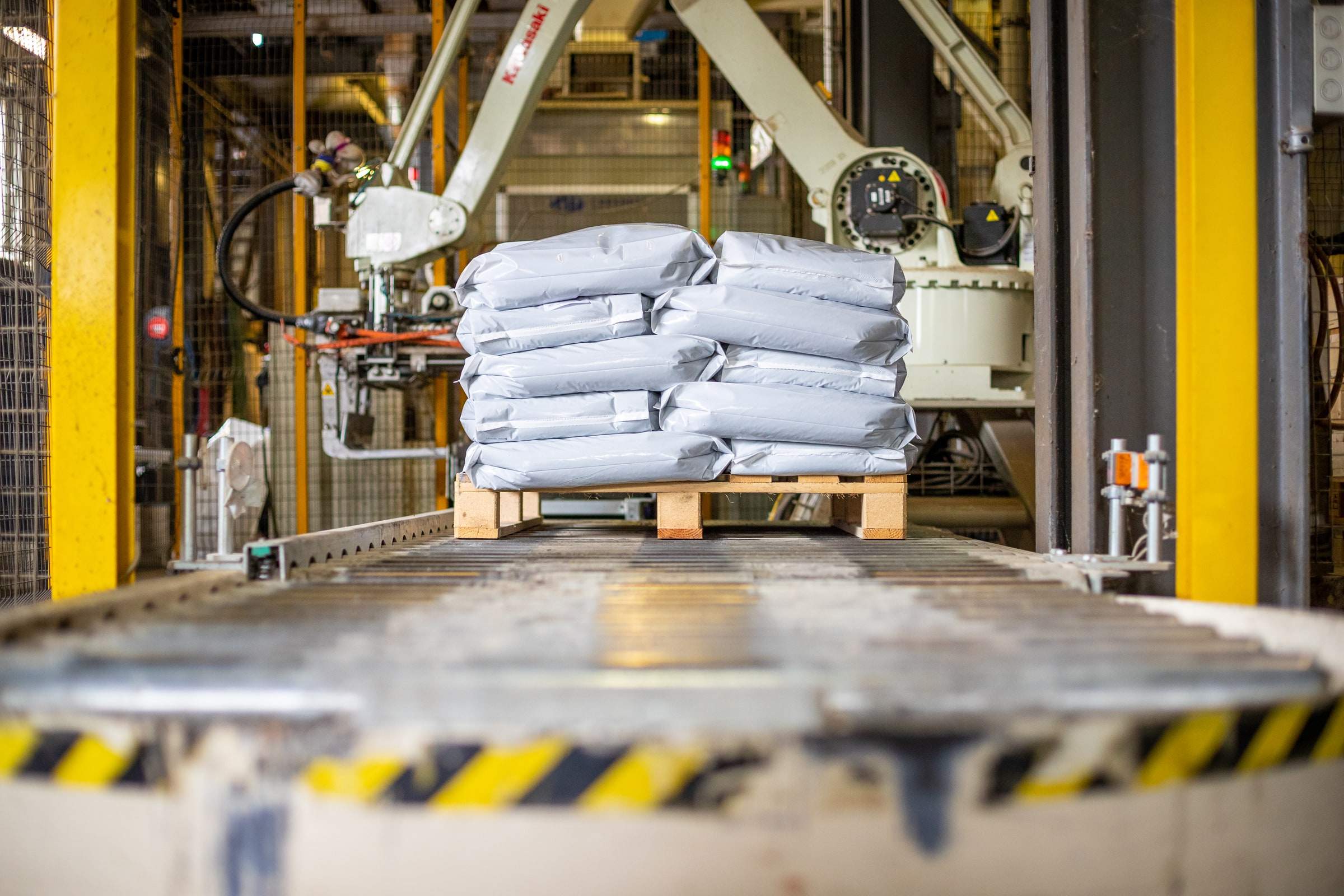
Palletising the feed bags 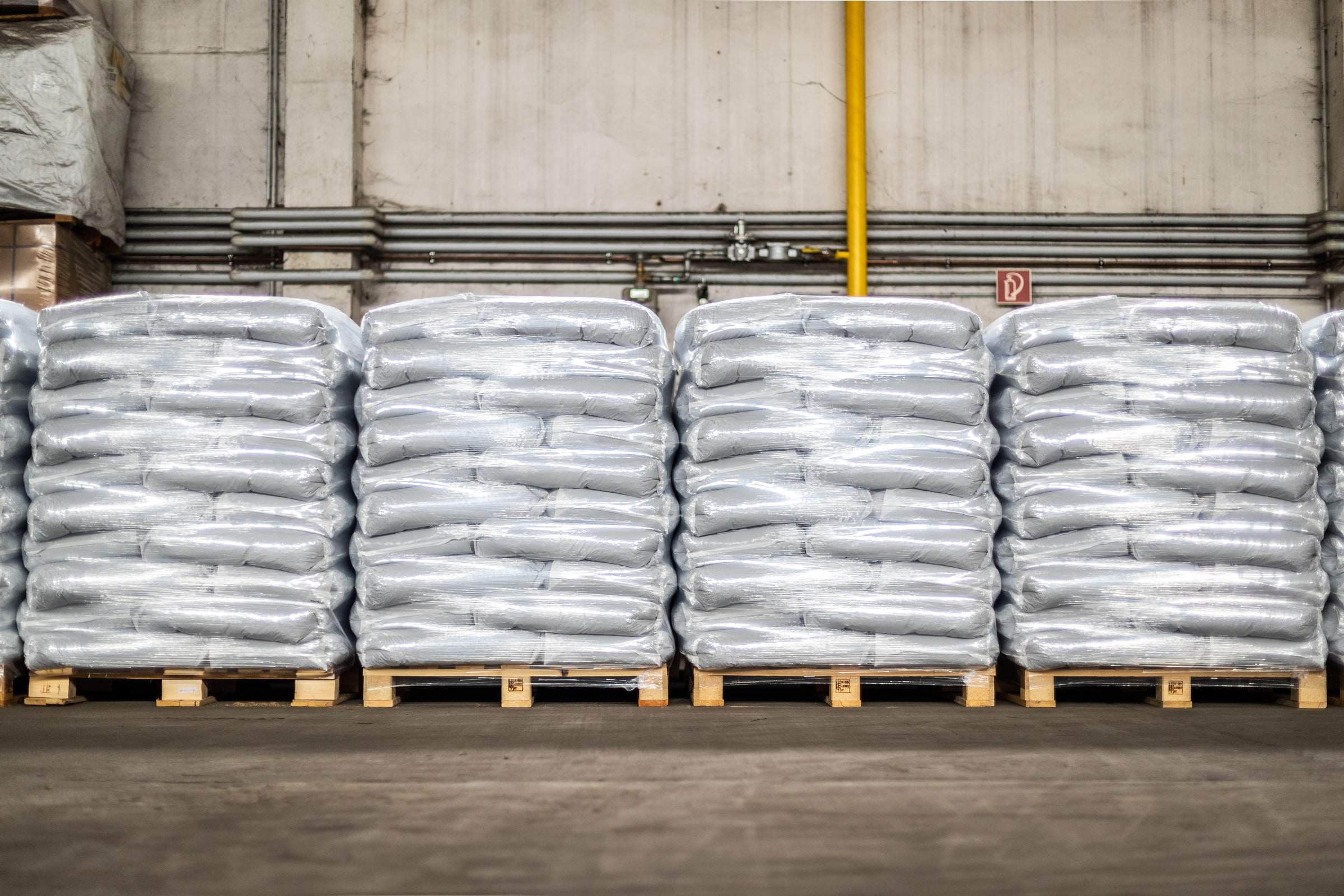
Packed feed in the warehouse
Tested and made in Germany


